

THIS PAGE WILL BE UPDATED WITH THE LATEST NEWS
UPDATE: 4:30 PM CET
Joint Declaration Following the G7 Foreign Ministers’ Meeting in Paris
On Iran, we commended the work of the regional mediators and reiterated our support for all diplomatic efforts aimed at reaching a lasting settlement that addresses international concerns over Iran’s nuclear program and contributes to regional security. We reiterated that Iran must never be allowed to develop or acquire a nuclear weapon. We urged Iran to stop its support for nonstate armed groups in the region. Absent a diplomatic solution, we committed to continuing our coordination to economically and politically constrain the Iranian regime’s ability to sow instability in the region and around the world.
We strongly condemned Iran’s attacks against its neighbours and the disruption of international trade, energy security, and the global economy caused by the obstruction of transit passage through the Strait of Hormuz. We reaffirmed the importance of protecting civilians and civilian objects, and called on Iran to respect its international human rights and humanitarian law obligations. We called on Iran to cease its persistent attacks against civilian vessels in the Strait of Hormuz. We reaffirmed our commitment to the right of safe and free passage and our opposition to any tolls, fees, illegal costs, discriminations or any limitation imposed on maritime transit through the Strait. We underscored the importance of the defensive activities undertaken by U.S. Central Command in the Strait of Hormuz to demine the waterway and escort civilian vessels.
UPDATE: 2:00 PM CET
Iran-Backed Trio Accused of Plotting Attacks on U.K. Base Hosting U.S. Jets

The indictment, unsealed on Tuesday, names Mohammad Baqer Saad Dawood Al-Saadi, 32, who holds Iranian and Iraqi citizenship, Mohsen Mohajeri, 48, an Iranian, and Mohammed Ali Al-Hassani, 35, an Iraqi. Prosecutors allege the men acted on behalf of Iran’s Islamic Revolutionary Guard Corps and the Iraqi militia Kata’ib Hezbollah to orchestrate, plan and conduct the attacks through a network of associates across Europe and the U.S., targeting Jewish communities and a British base hosting American troops. The indictment cites plots against synagogues in London and in New York. Both Iran’s Revolutionary Guard and Kata’ib Hezbollah are designated by the United States as foreign terrorist organizations.
The court filings describe an operation that was directed, in part, by the suspects who were thousands of miles away. In April, prosecutors have alleged, the three men gathered in a room and watched an attack unfold live on a large screen via Apple’s FaceTime video calling app. Al-Hassani allegedly coached the attacker through igniting and hurling a series of seemingly incendiary devices while Al-Saadi filmed.
UPDATE: 1:00 PM CET
FBI Adds Islamic Revolutionary Guard Corps Member to Most Wanted Terrorists List, Offers $20 Million Reward

The FBI Washington Field Office has added Islamic Revolutionary Guards Corps member Shahram Poursafi to the Most Wanted Terrorists list and released seeking information posters on three of his associates. From October 2021 to April 2022, Poursafi allegedly solicited the murder of two former U.S. government officials. According to court documents, Poursafi, aka Mehdi Rezayi, allegedly tried to hire someone to kill the officials, likely in retaliation for the January 2020 death of Islamic Revolutionary Guards Corps-Qods Force commander Qasem Soleimani. Working on behalf of the IRGC-QF, he sought to pay individuals in the U.S. $300,000 to commit the murder. A complaint filed in August 2022 charged Poursafi with using interstate commerce facilities in the commission of a murder-for-hire and with providing and attempting to provide material support to a transnational murder plot.
“The FBI will not stand for the IRGC’s brazen attempts to silence, harm, or murder activists, dissidents, journalists, public officials, or anyone else it deems a threat,” said Special Agent in Charge Gregory Heeb of the FBI Washington Field Office’s Counterterrorism Division. “We hope the publicity generated by these posters will help us continue to disrupt lethal plots and bring IRGC members to justice for threatening individuals within our borders.”
France Vows Sanctions for Supermarket Hacks as Iran Rejects ‘Baseless Accusations’

France‘s foreign minister said Tuesday that Paris ruled out “nothing” to respond to a major cyberattack on hundreds of supermarket fridges in October that it has blamed on Iran.
Foreign Minister Jean-Noel Barrot told FranceinfoTV that Iran’s ambassador would be summoned and European-level sanctions would be sought.
“I can also tell you that we rule nothing out and will take all measures – including those we may not disclose publicly – that we deem proportionate and necessary to deter any further attacks,” he added.
The goal, Barrot said, is “to deter anyone who might be tempted, in Iran or elsewhere, to do it again”.
Barrot said Monday that Iran’s Islamic Revolutionary Guard Corps (IRGC) was behind cyberattacks on supermarkets in the first such large-scale cyber sabotage on French territory.
Three Iranian-Backed Operatives Indicted for Their Roles in Nearly 20 Terrorist Attacks and Attempted Attacks Across Europe and the United States

An eight-count superseding indictment was unsealed today charging Mohammad Baqer Saad Dawood al-Saadi, a dual Iranian-Iraqi national; Mohsen Mohajeri, an Iranian national; and Mohammad Ali al-Hassani, an Iraqi national, with terrorism-related offenses for their activities in support of Kata’ib Hizballah and Iran’s Islamic Revolutionary Guard Corps (IRGC), two U.S. designated foreign terrorist organizations (FTOs), including their involvement in nearly 20 attacks and attempted attacks throughout Europe and the United States, and a September 2026 terrorist plot at a British Royal Air Force Base in Fairford, United Kingdom, where American armed forces were stationed.
“Anyone who plans a terrorist plot on a military base housing American servicemembers will be prosecuted by the United States government,” said Attorney General Todd Blanche. “The defendants listed in the indictment allegedly supported two foreign terrorist organizations, and al-Saadi allegedly coordinated with his co-defendants in the days leading up to the attempted terrorist plot. This Department of Justice will continue dismantling terrorist networks and protecting the American people from terrorist organizations.”
“This eight-count indictment shows the determination of Iran to commit terrorist attacks in Europe and the U.S., including one plot that was recently prevented at RAF Fairfield, a British Royal Air Force Base where American forces were stationed,” said FBI Director Kash Patel. “According to the indictment, one of the subjects is behind bars awaiting trial yet he allegedly sent coded messages to assist in future acts of violence. To date, the subjects have been allegedly involved in nearly 20 attempted attacks throughout Europe and the United States in support of Kata’ib Hizballah and Iran’s Islamic Revolutionary Guard Corps (“IRGC”), two U.S. designated foreign terrorist organizations.
Canada Reimposes Sanctions Against 11 Iranian Entities

Canada announced the reimposition of sanctions against 11 Iranian entities previously delisted in 2016 in recognition of Iran’s progress under the Joint Comprehensive Plan of Action (JCPOA).
As a non-nuclear-weapon state under the Treaty on the Non-Proliferation of Nuclear Weapons, Iran is obligated to refrain from developing or acquiring nuclear weapons.
In July 2010, Canada imposed sanctions under the Special Economic Measures (Iran) Regulations in consultation with like-minded partners, including the United States and the European Union, following Iran’s failure to meet its international obligations related to its nuclear program.
In July 2015, China, France, Germany, Russia, the United Kingdom and the United States, with the European Union, reached the JCPOA agreement with Iran. Endorsed by United Nations Security Council Resolution 2231, the agreement provided for restrictions on Iran’s nuclear program and enhanced International Atomic Energy Agency (IAEA) verification, including through the Additional Protocol, in exchange for sanctions relief.
Iran Was Behind Cyber-Attack on French Supermarket Freezers, Paris Says

France has said Iran was responsible for a massive cyber-attack on supermarket freezers and chiller cabinets that was described by its foreign minister as being an act of “unprecedented scale and unprecedented aggression”.
Jean-Noël Barrot said “Europe-wide sanctions” would be imposed against those responsible, adding that the attacks – which took control of digital thermostats to push temperatures up to above 50C – constituted “a major violation of the nation’s interests”.
At a press briefing during the G7 summit in Paris, he said: “Thanks to the remarkable efforts of government agencies, I am able to confirm that the Islamic Republic of Iran’s Revolutionary Guards are responsible for this attack.”
He said the Iranian ambassador had been summoned “to protest in the strongest possible terms against this extremely serious act.”
Swathes of French supermarkets were hit in the cyber-attacks on 11 and 12 October. Some were forced to throw away entire inventories of perishable food.
The Drums of War and Reza Pahlavi’s False Promise of Deliverance

Iran is approaching a dangerous convergence of internal repression and external war. The crises that drove the January uprising remain unresolved. The regime has answered public anger with lethal force, mass arrests, and communications restrictions, while renewed American and Israeli military action threatens deeper suffering. In this setting, Crown Prince Reza Pahlavi again presents himself as ready to take charge, calling for defections and implying that foreign pressure could open his path to power.
The central issue is not a contest between two comparable poles: the regime and Pahlavi, with the Iranian people trapped between them. That framing grants him political weight, organization, and legitimacy he does not possess. Iran’s real conflict is between a repressive ruling system and a society seeking freedom and sovereignty. Pahlavi is not an equal force in that struggle, but an opportunistic claimant who may exploit war, media exposure and public desperation to manufacture the appearance of an alternative.
That distinction is essential as the drums of war grow louder. October reporting indicated that President Donald Trump opposed proposed Israeli strikes before the American midterm elections, leaving open the possibility of action afterward. Another campaign is not inevitable, but the danger is substantial. The closer Iran moves toward war, the easier it becomes for figures with little domestic presence to present themselves abroad as indispensable.
UPDATE: 9:00 AM CET
Iranian Political Prisoner Mohammad Javad Vafaei Sani Wins Prestigious Magnitsky Human Rights Award

Iranian political prisoner Mohammad Javad Vafaei Sani, a boxing champion and supporter of the People’s Mojahedin Organization of Iran (PMOI/MEK) who has spent nearly seven years behind bars and faces execution, has been named the recipient of the 2026 Magnitsky Award for Outstanding Human Rights Activist.
The prestigious international award recognizes his courage in standing against political repression and defending fundamental human rights despite years of imprisonment, torture, and repeated death sentences by the Iranian regime.
The official award announcement describes Vafaei Sani’s case as a symbol of the persecution of peaceful dissent in Iran and highlights the international campaign for his release and the annulment of his death sentence.
The formal award ceremony is scheduled for November 12 in London, where British Member of Parliament Bob Blackman, chair of the British Committee for Iran Freedom, will present the award.
The recognition comes at a critical moment for Vafaei Sani, whose death sentence was upheld by Iran’s Supreme Court in October 2025 and subsequently forwarded for implementation.
66 Prisons mark 146th week of ‘No to Executions Tuesdays’ as Iran’s death toll mounts
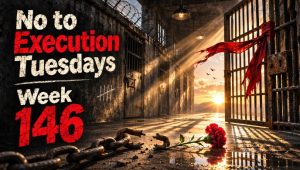
On Tuesday, November 10, 2026, prisoners across 66 different penal facilities in Iran launched a coordinated hunger strike to mark the 146th consecutive week of the “No to Executions Tuesdays” campaign.
The widespread protest comes as political prisoners continue to push back against the regime’s systematic use of the death penalty, demonstrating a highly organized resistance despite severe retaliation. Over the past weeks, participating inmates have faced escalating security pressures, direct threats, strict limitations on their communication with the outside world, and various punitive measures designed to exhaust them and silence their protests.
However, despite the regime’s relentless attempts to break their spirit, the campaign has transformed into a symbol of unwavering defiance over the course of nearly three years. By staging hunger strikes week after week, the prisoners boldly reaffirm their opposition to capital punishment and their defense of the fundamental right to life.
Iran’s Bank Lending Surges 66%, but Most Industrial Credit Still Goes to Keeping Factories Running
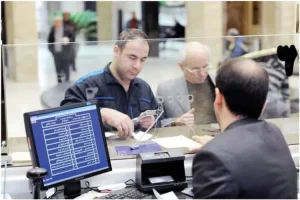
New Central Bank figures show that nearly 89% of loans to industry and mining are financing day-to-day operations, raising questions about how Iran can fund reconstruction and expand production amid an economic contraction and rising banking costs.
Iran’s banks increased lending by nearly 66% in the first seven months of 2026, but almost nine-tenths of credit to industry and mining went toward financing existing operations rather than creating or expanding production capacity, according to new Central Bank figures.
The banking system disbursed 9,241.3 trillion tomans during the seven months ending October 22, up 65.9% from a year earlier, according to the Central Bank’s November 5 report.
Businesses received 77.4% of the lending, while households accounted for 22.6%.
Yet 88.7% of loans to industry and mining were classified as working capital, highlighting the demands on a financial system struggling to sustain production while Iran’s economy contracts and investment declines.
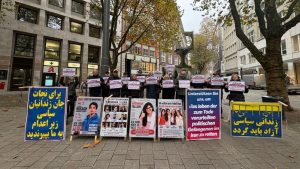
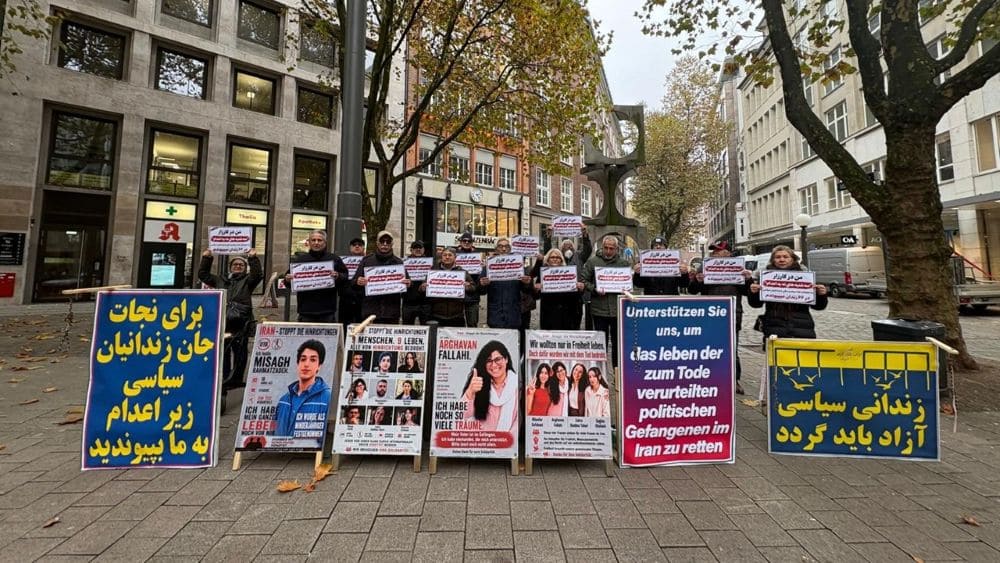
Hamburg, Germany – November 10, 2026: Supporters of the People’s Mojahedin Organization of Iran (PMOI/MEK) held a gathering in Hamburg in solidarity with the 146th week of the “No to Execution Tuesdays” campaign, expressing their support for prisoners across Iran who continue to protest against the death penalty and demand justice and freedom.
The gathering highlighted the ongoing resistance of prisoners in 66 prisons across Iran, where inmates have designated every Tuesday as a day of protest and resistance against executions. Despite the harsh conditions behind prison walls, they remain determined to continue their struggle until the abolition of the death penalty and the establishment of social justice in Iran.
Participants in the Hamburg gathering emphasized that these prisoners represent the voice of a nation seeking freedom and an end to executions. Their protest sends a powerful message of defiance against a practice that continues to claim lives and violate the most fundamental human rights.
The supporters of the PMOI called on freedom-loving people, human rights advocates, and all those committed to human dignity to join the “No to Execution Tuesdays” campaign and amplify the voices of prisoners who are fighting for their lives behind bars.